
7 common problems landlords face and how to solve them
From late payments to persistent vacancies, learn the 7 most common problems rental property owners face and practical ways to solve each one.
Managing a rental property isn’t easy. Behind the steady monthly income lies a stream of challenges that keep coming, from late-paying tenants to disorganized records to rooms that sit empty for months.
If you feel frustrated by these problems, you’re not alone. Based on conversations with hundreds of rental property owners, there are 7 problems that come up most often, and every one of them has a solution you can apply right away.
1. Tenants often pay rent late
This is the number-one problem almost every landlord has faced. One or two habitually late tenants can wreck your cash flow, especially if you rely on rental income to cover a mortgage or operating costs.
Why it happens
Most late payments aren’t because tenants don’t want to pay, they happen because there’s no clear reminder. Tenants forget, or assume there’s still some leeway.
How to solve it
- Set a clear due date in the contract and remind tenants every month
- Send a reminder 3 days before the due date, not after they’re late
- Apply a reasonable late fee, around Rp 5,000–10,000 (roughly $0.30–0.70 USD) per day, and enforce it consistently from day one
- Use a rental management app like Kamaru that automatically sends payment notifications to tenants on schedule
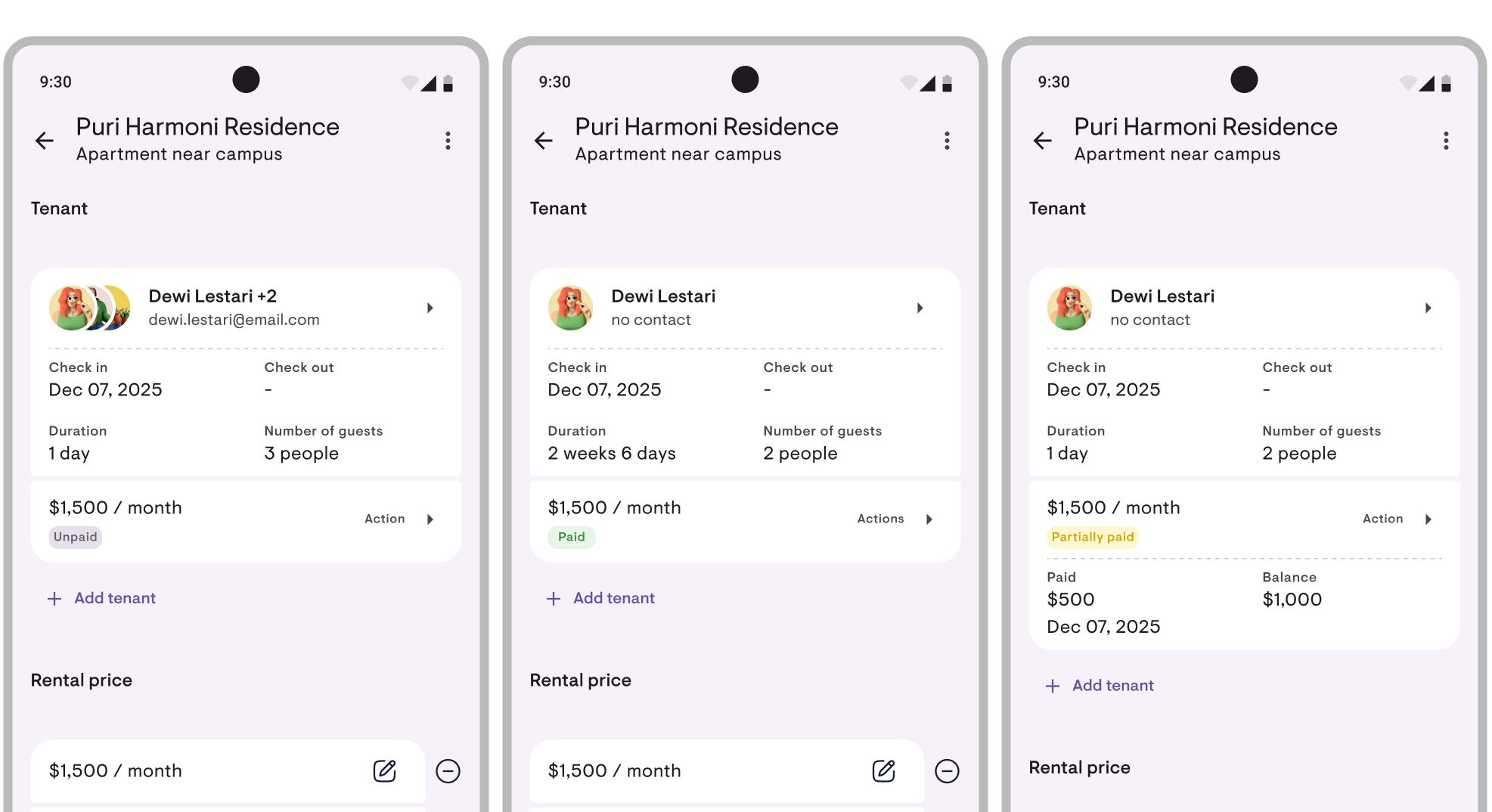
For a full strategy, read: 8 ways to reduce rental payment arrears.
2. Disorganized tenant data
ID card photos stored in your phone gallery, mixed with vacation pics. Emergency contact numbers never written down. Lease agreements you don’t remember where you saved. This is extremely common, and dangerous.
Why this is a problem
When there’s a dispute, you need evidence. When a tenant leaves without notice, you need emergency contacts. When there’s an inspection, you need complete, orderly documentation. Disorganized data leaves you powerless in these critical moments.
How to solve it
- Build a consistent document storage system, either physical folders per tenant or a digital equivalent
- Require an ID scan at first check-in, not later
- Record not just tenant data but also emergency contacts, bank account numbers, and lease end dates
- Use the AI-powered ID scan feature in Kamaru to auto-fill tenant data from a photo of their ID, accurate and fast without manual typing

Full guide: How to manage tenant documents digitally.
3. Rooms that sit empty for too long
An empty room is real loss. Every month it stays vacant, you pay for utilities and maintenance without any income. In slow seasons, this can drag on for months.
Why it happens
Many landlords rely on only one or two promotion channels: a sign out front, or word of mouth. In the digital age, that’s not enough.
How to solve it
- List your property on multiple platforms at once: local rental listing sites, social media, and neighborhood networks
- Make sure room photos are high quality, with good lighting and tidy staging before shooting
- Consider promo pricing in slow seasons (first-month discount, or free cleaning fee)
- Ask satisfied tenants to leave online reviews, which builds trust with prospective new tenants
- Offer daily or weekly packages for rooms that haven’t filled
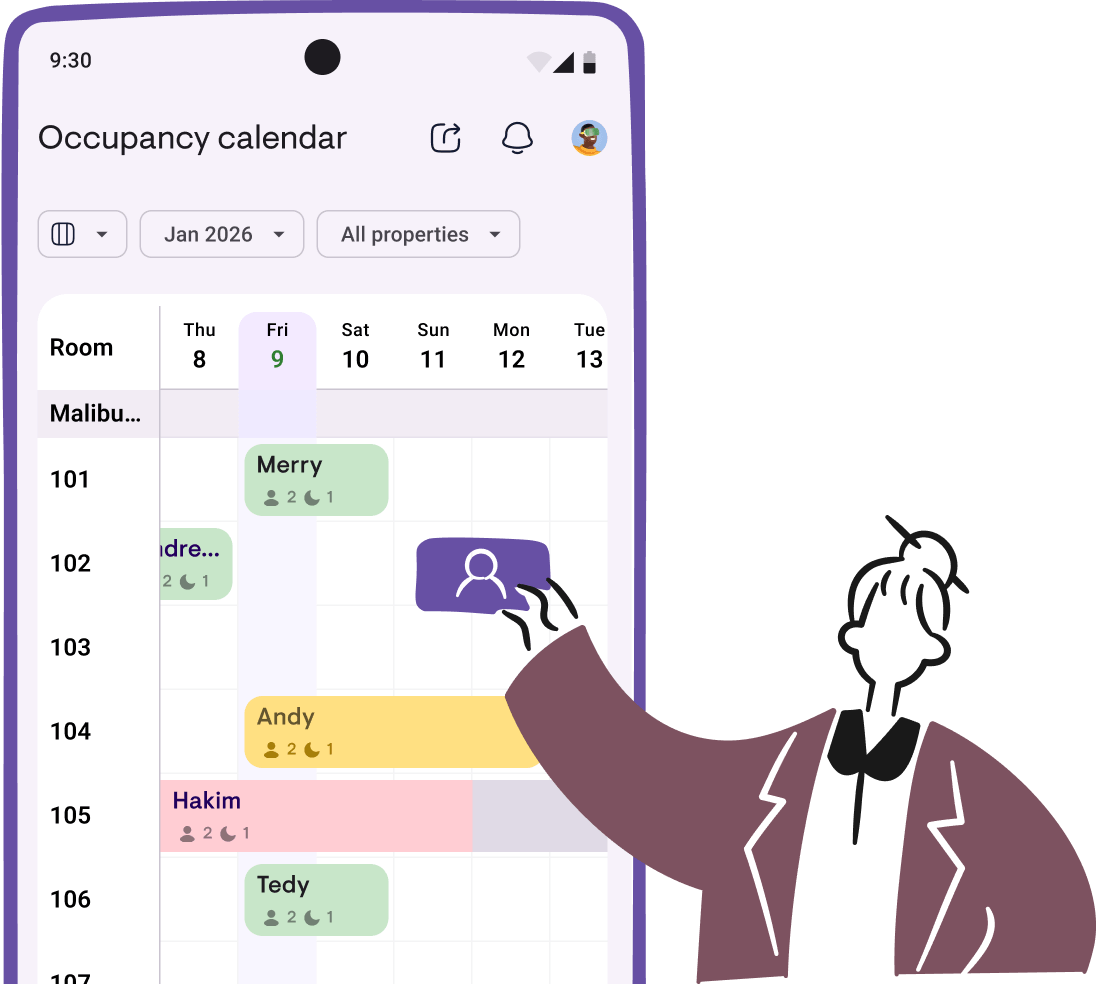
More strategies: How to fill empty rooms in slow seasons.
4. Unclear financial reports
How much is your rental property actually profiting this month? After deducting electricity, water, wifi, repairs, and taxes, are you really in the black?
Many landlords can’t answer this precisely because they don’t have structured financial reports. They know money is coming in, but they don’t know how much is going out and to what.
Why this is dangerous
Without clear reports, you can’t tell whether your rent is priced right, when to raise rates, or how much tax you owe. When something unexpected comes up, a major repair or renovation, you have no visibility on whether your finances can cover it.
How to solve it
- Separate your rental bank account from your personal account
- Record every operating expense, no matter how small: light bulbs, contractor fees, cleaning supplies
- Build a simple monthly report: rental income vs. operating expenses vs. net profit
- Use an app that automatically generates financial reports from the data you’ve entered
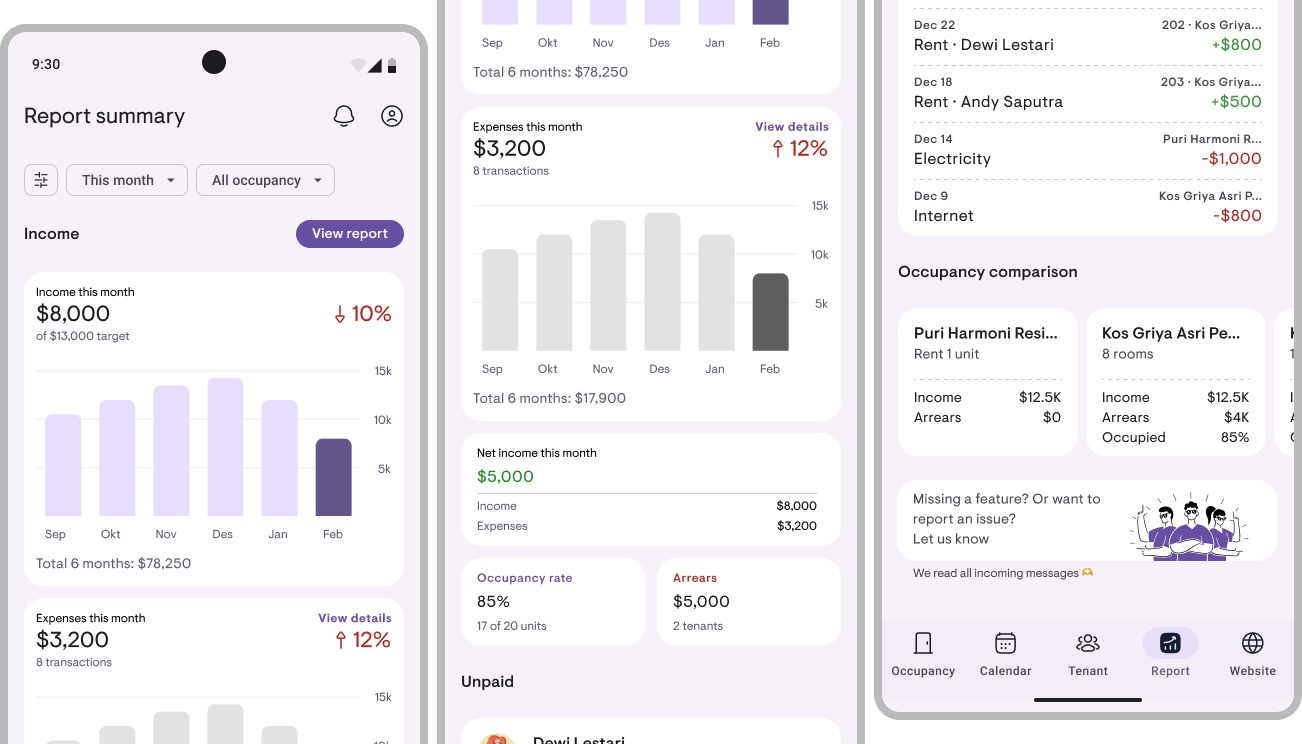
Practical guide: How to create simple but complete rental financial reports.
5. Property damage that goes undetected
A leaking AC, a clogged toilet, a cracked wall, small damage left alone can turn into major repair bills. The problem is that many tenants don’t report because they don’t know who to contact, or they worry they’ll be charged.
Why it happens
There’s no clear reporting channel. Tenants aren’t sure whether it’s their responsibility or the owner’s. Owners rarely do routine inspections either.
How to solve it
- Set clear protocol from the start: what damage is the tenant’s responsibility, and what falls on the owner
- Provide a dedicated WhatsApp number or contact that’s easy to reach for damage reports
- Do room inspections regularly, at least twice a year, especially for rooms occupied for a long time
- Document room condition at check-in and check-out with time-stamped photos as comparison evidence
6. Conflict between tenants
Loud music at night, parking that takes someone else’s spot, a dirty shared kitchen, small conflicts between tenants that go unaddressed can lead to residents moving out and your reputation being damaged.
Why this is hard to handle
Landlords often don’t want to get involved because it’s seen as private tenant business. But an unpleasant environment directly impacts your occupancy rate and your reviews.
How to solve it
- Create written house rules and have tenants sign them at check-in
- Rules should be specific: quiet hours, guest policies, shared-facility usage
- Position yourself as a neutral mediator, not a judge
- When there’s conflict, listen to both sides before making a decision
- Tenants who repeatedly break rules need a written warning, which also serves as documentation if you need to move to lease termination
Guide on handling problem tenants: How to handle problem tenants professionally.
7. Management is still fully manual and eats your time
Billing via WhatsApp one by one. Recording payments in a notebook. Making receipts by hand. Managing everything from your personal phone without a structured system. This might still feel manageable with 5 rooms, but what about 15 or 20?
Why this becomes a serious problem
Manual management isn’t just tiring, it’s also error-prone. One missed entry or one unanswered WhatsApp message can spark a misunderstanding with a tenant. And the bigger your rental business grows, the bigger the risk of these errors.
How to solve it
- Start digitizing one aspect at a time, for example payment tracking
- Use a spreadsheet template if you’re not ready for a paid app
- Consider a rental management app like Kamaru that combines tenant data, payment tracking, automatic reminders, and financial reports in one place, no complicated setup needed
Signs your rental business needs a digital system: 7 signs your rental needs digital management.
Which problem is most relevant for you?
The seven problems above are very common, but not every landlord faces them with the same weight. Student-focused rentals have different challenges than working-professional rentals. A 5-room property is different from a 30-room one.
The key: don’t wait for problems to pile up. One simple, consistent system, starting with organized payment tracking and tenant data, is already enough to prevent most of the problems above.
If you want to start with the easiest thing, try Kamaru free. In 5 minutes, you can register your tenants, record payments, and get automatic reminders, no setup fees, no contracts.
Have questions or feedback? We'd love to hear from you. Email us.

Start managing for free today
Join other landlords who are already using Kamaru to manage their properties.

